GolfStinks

A Golf Blog for the Rest of Us!

  • Home
  • About
  • Most Popular
  • Categories
    • Stinky Golfer Paradise
    • Golf Life
    • The Pro Tours
    • Reviews
    • The Economics of Golf
    • Golf Growth & Diversity
    • Health & Environment
    • Golf Destinations
  • Golf Terms
  • Newsletter

Are There Too Many Golf Courses?

April 12, 2010 | By Chris Chirico | 2 Comments

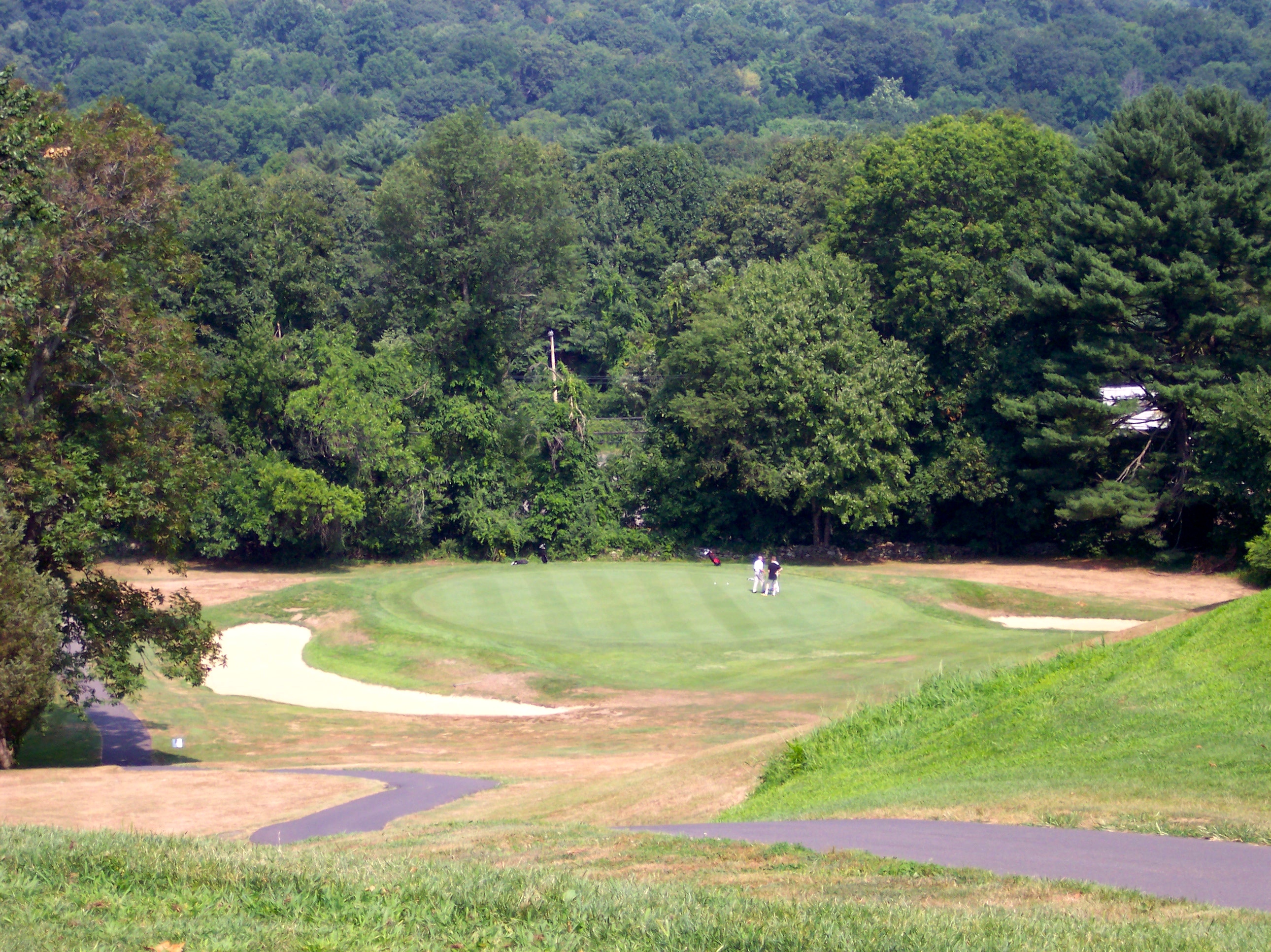
Can there ever be too many golf courses? (photo by Saskia2586 / CC BY 3.0)

Now that The Masters is over I have to tell you, I am all golfed out. Honestly, I may have watched about a half-hour, in total, of the tournament. But between all of the coverage on ESPN and various other sports networks and news shows, specifically the Tiger coverage, I feel like I was in the galleries all four days! I don’t think I can watch another five minutes of a tournament for the rest of the year!

However, that does not curb my desire to get back out onto the many courses which my home state of Connecticut has to offer. But a couple of stories in my local news lately have me wondering…are there too many golf courses?

The obvious answer for one who loves to golf, especially those of us who enjoy playing different courses all the time, is “not a chance.” How can you have too many golf courses? After all, the old saying “variety is the spice of life” indeed equates to your golf life also. Maybe the more appropriate question wouldn’t be to ask if there are too many golf courses, but instead to ask, is a new golf course really necessary? Or, is there a better use for that land?

In my current hometown, a town of about 45,000, we have two nine-hole courses. Recently, the idea to use a piece of undeveloped public land to build another nine-hole course was proposed by a local developer. The Economic Development Committee approved the proposal, but many spoke out at a recent Common Council meeting. In favor of the course were some local business owners hoping the course brings more people into the city. However, many spoke out against the course. Some concerns were tax and rent payments (or lack thereof), privatization of public land, outside investors and the plan meeting environmental standards. However, one major concern asked, what if the course fails? You are left with nothing more than carved up land, which would make later development more challenging, and the city expected to foot the bill. One can see where the concern would be.

My personal opinion? There are already two nine-hole courses in town. Additionally, there are four eighteen-hole courses within ten miles. Is another nine-holer necessary? As for bringing people into the city, how many golfers regularly travel to other towns to play nine-holes, especially when the surrounding towns have eighteen-hole courses? Add to that the fact there are already two nine-hole courses in this town, then how much more business is the course actually going to generate?

This reminds me a bit of a situation from the town in which I used to live – my hometown (population of about 60,000). It offered one eighteen and two nine-hole courses. But when the idea to build a new middle school on the grounds of one of the nine-hole courses was proposed, it was met with some hostility. The course in question was, to put it lightly, a bombed-out disaster of a mortar range which I had the displeasure of playing exactly once and swore to myself to never play again. It was in fact, with no exaggeration, that bad.

But, the course was very popular with the senior crowd. It was flat, wide open and an easy course to walk if you chose. And not too mention, cheap. Due to its low (if any) maintenance costs and the popularity with seniors and first-timers, I’m sure the course made some money for the town. But the question actually was: What’s more important, keeping this crappy course around to satisfy a few people who have other options, or building a new, better, safer school, in a better, safer neighborhood for 1,200 students year-in and year-out?

To me, the answer here seems obvious – kill the course. But I guess there are some of us who believe the future of our children isn’t as important as having to spend an extra six bucks to play a different nine-hole course.

Now don’t get me wrong, being a golfer, I always looking forward to playing a new course and feel a new course is typically a great idea. But, we also have to consider the cost. Be it a risky investment at the cost of the taxpayer, environmental issues or the future of our young students. All of these issues, and then some, have to be addressed before we can truly learn the value of a golf course.

Filed Under: Golf Life, Health & Environment Tagged With: eighteen holes, environment, ESPN, nine holes, The Masters, tiger woods, too many golf courses

Would You Play a Brown Golf Course?

February 3, 2010 | By Greg D'Andrea | 5 Comments

100_1250
Is this golf course burned or intentionally left to brown? (photo by Greg D’Andrea)

Imagine this: You and your golf buddies have saved all year to take a winter golf trip down to the Sunshine State. Naturally, you’ve picked the courses based on how lush and green they look on their respective websites. You’ve packed the clubs, boarded your flight, touched-down to 80-degree weather and arrived on the first tee…only to find a lot more brown than you expected.

WTF? Well, you may be looking at a new reality in golf…but that’s not necessarily a bad thing.

“The problem with golf is one of expectations. The ‘Augusta effect’, by which golfers at courses around the world come to identify a certain look with perfection, and to believe that they should get that look wherever and whenever they play…”

The quote above was taken from the April 2008 edition of Golf Course Architecture. The article highlights the environmental issues with overseeding – a common practice at golf courses to keep grass (bermuda grass in most cases) looking lush during the winter months.

To overseed, courses use many resources, not-the-least of which is water. Not only is the practice wasteful, but it’s expensive. But now with the economy struggling, many golf courses simply can’t afford the extra water, seed and irrigation. What’s more, labor and fertilizer costs become pricey because overseeding leads to more weeds and increased risks associated with preparing the course for spring. As a result, some courses have stopped the overseeding process altogether, which saves the course money but diminishes lushness and that bright green grass we as golfers have come to expect.

But brown grass doesn’t equal bad grass. In the December 2009 issue of Golf Magazine, Dr. Stacey Bonos suggests that being brown “doesn’t mean the grass is unplayable.” In fact, the author of the Golf Course Architecture article exclaims this type of grass “is a fantastic playing surface, tight, firm and bouncy, with great rollout.” So really, we just need to get over that brown color. Dr. Bonos adds: “…agronomists and course superintendents have been working to alter the mind-set of golfers and clubs, who have come to expect grass to be pure green.”

In addition, the USGA’s Green Section Record recently published an article entitled “Breaking the Winter Green Addiction” that blames course marketing materials for sending the wrong impression:

“Flip through the pages of any golf or travel magazine and there will be numerous advertisements with photos of lush, green, highly manicured Florida golf courses. The majority of these pictures are taken during the summer, when grass is actively growing and indeed lush and green.”

The article points out that tourists want to play golf in Florida during the fall, winter and spring – when the courses’ natural state would not be so lush or green – which is why courses started overseeding in the first place. But reversing the overseeding trend is not limited to Florida. Many courses in the US – including the south and southwest – and also many courses internationally are slowly reducing their overseeding process.

That being said, I’ve spoken with Spanish golf environmental consultant Alejandro Nagy, who supports letting courses go brown for about three months of the year. In a recent article on elperiodigolf.com, Mr. Nagy reports that due to the “complicated climate” on the Iberian Peninsula, courses use just one grass type for both summer and winter play – adding that despite an “ugly face” during the winter, the courses have the same playability.

So does this mean our winter golf getaways will be tarnished by beige blades of grass? Not necessarily.

Alternative water sources, such as effluent water and seawater, can be used on courses for far less money than typical water sources – helping to reduce water waste. But this solution has drawbacks too – like the adverse reaction many types of grass have to saltwater. Nevertheless, studies are currently underway to ascertain which types of grass work best with alternative water supplies.

In the meantime, it appears we may have to endure aesthetics that are not exactly up to our “Augusta” expectations. But everything I’ve read for this post claims that’s a good thing – the challenge is to get average golfers to embrace this notion too. And being an average guy myself, who am I to disagree? I say bring on the brown!

Filed Under: Health & Environment Tagged With: alejandro nagy, augusta national, elperiodigolf, environment, golf course architecture, green section record, overseeding, USGA

4 Ways to Golf Eco-Friendly

September 10, 2009 | By Greg D'Andrea | 5 Comments

Reusable bottles: One way to help stay green on the golf course...
Reusable bottles: One way to help stay green on the golf course…

Let’s face it, regardless of whether you believe in global warming or not, as a golfer you should be doing all you can to help protect the environment we live in. After all, golf is a game that, aside from the cart paths, is played in nature’s entire splendor. And if we inadvertently ruin nature, it wouldn’t be much fun teeing-off from a driving range mat and hitting onto a green made of AstroTurf, would it?

So what can we as golfers do? By now, most of us have seen those cork-screw-shaped florescent light bulbs, chemical-free cleaning products and that Energy Star logo on our electronic toys…not to mention all the hybrid cars on the road these days.

But can you play golf more eco-friendly? Haven’t given that notion much thought? Or wondering how that’s even possible? Well, if you want to be green while on the green, here are some tips to get you started:

Tip # 1: Change your golf tees. According to Eco Golf, there are over 2 billion golf tees used in the United States annually. Two billion! That means millions of trees are cut down each year just to support your golf ball on a few drives. What’s worse, sometimes tees don’t even last a few drives, as many tend to break after just one swing (especially those new “long” tees people are using with oversized drivers). Ultimately, even if the tee doesn’t break, we’ll still forget to pick it up because we’re either admiring our drive or swearing at it.

The good news is there are eco-friendly tees out there to buy. The aforementioned Eco Golf, located in Knox, Indiana, is one such company. It manufactures three different biodegradable tee styles which you can purchase directly from the company. Another option is the Bonfit Biodegradable Zero Friction Tee. I purchased a pack of 50 of these and they lasted me the entire season. Hey, tees may be a small thing, but all that wood adds up!

Tip # 2: Carry a non-plastic water bottle. So if golfers go through 2 billion tees every year, how many of those stupid cone-shaped 7 oz. cups would you say we go through in a year? Is it just me or do we fill-up those snow-cone cups about 10 times when we’re thirsty? Not only is it annoying, but think of all the wasted paper and plastic!

The eco-friendly and healthy answer? Begin carrying a non-plastic water bottle like one from Klean Kanteen. I purchased a bottle from them last year – it fits perfectly in the bottle holder on my golf bag. It’s much lighter than you’d expect too, and you don’t have to wait till the next water jug or MOFOBETE to rehydrate.

Tip # 3: Leave the cart at the clubhouse (if possible). I’m sure I don’t have to explain the environmental implications caused by gas golf carts, but this is a tough one to abide by for a couple reasons: First, many courses require you to take a cart (especially on the weekends) and second, many golfers simply can’t play without one due to health reasons. For those of us fortunate enough to be able to walk 9- or 18-holes, we should probably avoid taking carts at all costs. If you must take a cart, try and stick to the “cart paths only rule” to limit gas usage. And, it wouldn’t hurt to petition your course to switch over to electric carts either.

Tip # 4: Choose your golf balls wisely. According to the NGF, an estimated 2.5 billion golf balls are lost every year (and you thought you were the only one that stinks at this game). Up until recently, there weren’t any biodegradable golf balls on the market. But now, you do have a biodegradable ball option for actual course play – Dixon Golf is touting the world’s first 100 percent eco-friendly golf ball. According to the company, the Dixon “Earth” ball does not sacrifice any of the playability of normal two-piece balls, despite being constructed of all recycled materials.

But, if you’re worried your balls will decompose in your bag between rounds, there are also used golf balls, like those from Used Golf Ball Deals. These are brand-name balls that are priced based on the amount of damage they have.

So there you have it – a few ways we golfers can help the environment. After all, we mine as well save a few trees to help compensate for the ones cut down to build the course in the first place.

Filed Under: Health & Environment Tagged With: dixon golf, eco golf, eco-friendly, environment, environmental, klean kanteen, national golf foundation, ngf, recycled golf balls, refurbished golf balls, used golf balls

  • « Previous Page
  • 1
  • 2
  • 3
  • 4

Awards

Badges Badges Badges Best Mens Blogs Badges

Advertisements

GPI


Archives – Read all 1,000+ GolfStinks Posts!

Blogroll

  • Aussie Golfer
  • Black Girls Golf
  • Devil Ball Golf
  • Front9Back9 Golf Blog
  • Geoff Shackelford
  • Golf Blogger
  • Golf For Beginners
  • Golf Gear Geeks
  • Golf Girl's Diary
  • Golf News Net (GNN)
  • Golf Refugees
  • Golf State of Mind
  • Golfgal
  • My Daily Slice of Golf
  • Pillars of Golf
  • Ruthless Golf
  • The Breakfast Ball
  • The Grateful Golfer
  • UniqueGolfGears.com

Questions / Advertise

info@golfstinks.com

Disclaimers

See here

Privacy Policy

See here

Copyright © 2009-2025 GolfStinks.com - All rights reserved.