
GolfStinks

A Golf Blog for the Rest of Us!

  • Home
  • About
  • Most Popular
  • Categories
    • Stinky Golfer Paradise
    • Golf Life
    • The Pro Tours
    • Reviews
    • The Economics of Golf
    • Golf Growth & Diversity
    • Health & Environment
    • Golf Destinations
  • Golf Terms
  • Newsletter

4 Ways to Golf Eco-Friendly

September 10, 2009 | By Greg D'Andrea | 5 Comments

Reusable bottles: One way to help stay green on the golf course...
Reusable bottles: One way to help stay green on the golf course…

Let’s face it, regardless of whether you believe in global warming or not, as a golfer you should be doing all you can to help protect the environment we live in. After all, golf is a game that, aside from the cart paths, is played in nature’s entire splendor. And if we inadvertently ruin nature, it wouldn’t be much fun teeing-off from a driving range mat and hitting onto a green made of AstroTurf, would it?

So what can we as golfers do? By now, most of us have seen those cork-screw-shaped florescent light bulbs, chemical-free cleaning products and that Energy Star logo on our electronic toys…not to mention all the hybrid cars on the road these days.

But can you play golf more eco-friendly? Haven’t given that notion much thought? Or wondering how that’s even possible? Well, if you want to be green while on the green, here are some tips to get you started:

Tip # 1: Change your golf tees. According to Eco Golf, there are over 2 billion golf tees used in the United States annually. Two billion! That means millions of trees are cut down each year just to support your golf ball on a few drives. What’s worse, sometimes tees don’t even last a few drives, as many tend to break after just one swing (especially those new “long” tees people are using with oversized drivers). Ultimately, even if the tee doesn’t break, we’ll still forget to pick it up because we’re either admiring our drive or swearing at it.

The good news is there are eco-friendly tees out there to buy. The aforementioned Eco Golf, located in Knox, Indiana, is one such company. It manufactures three different biodegradable tee styles which you can purchase directly from the company. Another option is the Bonfit Biodegradable Zero Friction Tee. I purchased a pack of 50 of these and they lasted me the entire season. Hey, tees may be a small thing, but all that wood adds up!

Tip # 2: Carry a non-plastic water bottle. So if golfers go through 2 billion tees every year, how many of those stupid cone-shaped 7 oz. cups would you say we go through in a year? Is it just me or do we fill-up those snow-cone cups about 10 times when we’re thirsty? Not only is it annoying, but think of all the wasted paper and plastic!

The eco-friendly and healthy answer? Begin carrying a non-plastic water bottle like one from Klean Kanteen. I purchased a bottle from them last year – it fits perfectly in the bottle holder on my golf bag. It’s much lighter than you’d expect too, and you don’t have to wait till the next water jug or MOFOBETE to rehydrate.

Tip # 3: Leave the cart at the clubhouse (if possible). I’m sure I don’t have to explain the environmental implications caused by gas golf carts, but this is a tough one to abide by for a couple reasons: First, many courses require you to take a cart (especially on the weekends) and second, many golfers simply can’t play without one due to health reasons. For those of us fortunate enough to be able to walk 9- or 18-holes, we should probably avoid taking carts at all costs. If you must take a cart, try and stick to the “cart paths only rule” to limit gas usage. And, it wouldn’t hurt to petition your course to switch over to electric carts either.

Tip # 4: Choose your golf balls wisely. According to the NGF, an estimated 2.5 billion golf balls are lost every year (and you thought you were the only one that stinks at this game). Up until recently, there weren’t any biodegradable golf balls on the market. But now, you do have a biodegradable ball option for actual course play – Dixon Golf is touting the world’s first 100 percent eco-friendly golf ball. According to the company, the Dixon “Earth” ball does not sacrifice any of the playability of normal two-piece balls, despite being constructed of all recycled materials.

But, if you’re worried your balls will decompose in your bag between rounds, there are also used golf balls, like those from Used Golf Ball Deals. These are brand-name balls that are priced based on the amount of damage they have.

So there you have it – a few ways we golfers can help the environment. After all, we mine as well save a few trees to help compensate for the ones cut down to build the course in the first place.
Filed Under: Health & Environment Tagged With: dixon golf, eco golf, eco-friendly, environment, environmental, klean kanteen, national golf foundation, ngf, recycled golf balls, refurbished golf balls, used golf balls

Learn to Speak Golf

September 2, 2009 | By Greg D'Andrea | 2 Comments

Average golfers (that is the 99% of us that play this game) are bound by more than the fact we’ll never make the pro tour. We are bound by more than just inconsistent scores and local municipal courses.

There’s a camaraderie that develops the instant you shake the hand of your playing partner – a mutual understanding that you’re both here at this $40 pay-and-play course on a Saturday, hoping the backup on the first tee will move quickly so you can still get home and mow the lawn. Yes, you’ve just met, yet you already know you’ve got a sport, and a language in common.

The language I’m speaking of is the language of golf, and it links all average golfers together. I read an article in The New York Times a few months ago that only scratched the surface regarding this notion of golf’s unique language (in fact, the user comments served-up much better golf terminology than the article itself). But reading it not only reminded me what an integral part of the game it is, but it also got me excited to expand upon the Average Joe Golf Glossary we here at Golfstinks have been compiling for a few years now.

Ever hit a putt that stops at the edge of the cup but doesn’t fall in? That’s a Cuban. Why a Cuban? Because like the country, all the ball needed was one more revolution. Remember that time you hit a ball where no ball had ever gone before? I believe you were playing Trekkie Golf. How about hitting the ball left, then right, then left again? That’s Army Golf. Remember you almost had a Cuban once, but ended up with a Photo Finish? Yeah, that’s when the ball pauses for a second before dropping in the hole. The best part is no matter how bad your shot may have been, if your playing partner applies a good golf term to it, it’s hard not to crack a smile.

So please help us add to the list of terms, and let it be a resource for all the average Joe golfers out there. The fate of the game depends on us coming back for more golf – no matter how bad we stink!

Filed Under: Golf Life Tagged With: army golf, golf glossary, golf terms, pro golfer, trekkie golf

Round Rained Out? Tee-It-Up with Wii

August 28, 2009 | By Greg D'Andrea | 3 Comments

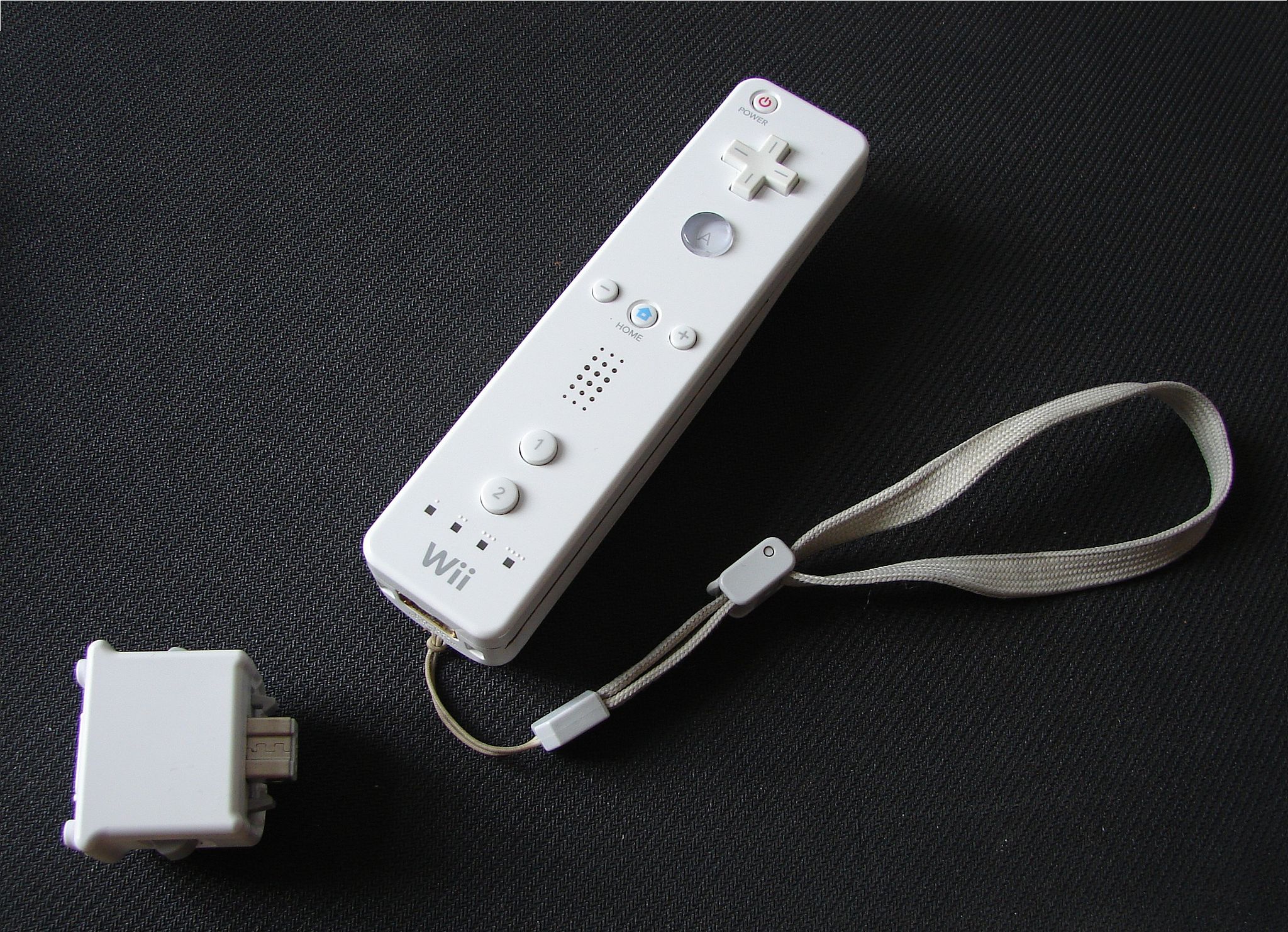
WiiMote_with_MotionPlus
The new Wii MotionPlus makes golf games more realistic (photo by Asmodi / CC BY-SA 3.0)

This summer, gamers were chomping at the bit to get their hands on the new MotionPlus component of the Nintendo Wii gaming system. For three years now, the Wii has entertained old and young alike with motion-sensing, wireless remote controllers that allow users to act-out the movement of your arm in video bowling or the swing of a club in video golf. It’s been all the rage and, in my opinion, far exceeds the fun from conventional “sit-on-your-couch” video game controllers.

But this year, Nintendo announced a new device (MotionPlus), which attaches to your existing Wii remote and greatly enhances the sensitivity of the controller – thus making your swings and movements more realistic on screen.

Much to my delight, one of the first games to take advantage of the MotionPlus adapter was Tiger Woods PGA Tour 10. The game, from EA Sports, gives users the ability to create themselves (fairly realistic looking) and then play their way from the amateur tour to the PGA Tour while competing against the likes of Tiger and other Tour pros – all on more than 20 realistically-rendered courses from around the globe (including Torrey Pines and St. Andrews).

I’ve been playing PGA Tour 10 on-and-off for about two months now and must say I truly enjoy it! In fact, it’s about as close as you can come to a golf simulator in your home. I stand in front of the TV holding my Wii controller in an “addressing the ball” position and swing my normal golf swing. The Wii does the rest. It senses the speed of my swing, and if I turned my wrists in or out (resulting in a hook or slice), then simulates your ball’s flight path.

Putting is just as realistic! Unlike many large golf simulators where you don’t putt, PGA Tour 10 lets you putt like you would on the course. The MotionPlus is so sensitive, it will register a simple “tap-in” motion with ease. And one of the cooler features is the course weather. Since the Nintendo Wii has built-in Wi-Fi, Wii connects to the internet and simulates the weather conditions at the course you’re playing. That’s right! I was playing at Banff Springs in Canada on my Wii the other day and it was raining on the course (which actually shortens club distances and makes putting harder in the game). I checked the weather in Alberta, Canada on my computer and sure enough, it was raining there too! Should note this feature can be turned off.

If you own a Wii, Tiger Woods PGA Tour 10 retails for $70 (MotionPlus adapter included). Trust me it’s worth it – since you’re not swinging an actual club, I can usually get three or four 18-hole rounds in without much physical fatigue. Best of all, when it’s dark or raining or snowing outside, you’ve got a tee-time anytime inside. Plus, you’ll never have to yell fore (unless you want to enjoy watching the neighbors duck for cover)!

Filed Under: Reviews Tagged With: banff springs, EA Sports, motionplus, Nintendo Wii, PGA Tour 10, simulator, st. andrews, tiger woods, torrey pines, video games

With Sideshow Status Diminished, Wie Begins Career

August 24, 2009 | By Greg D'Andrea | Leave a Comment

Michelle Wie’s career to this point had been basically relegated to a sideshow. “Come see the little girl take on the biggest and baddest male players in the game!”

Her sponsor, Nike, tossed oodles of cash at her family (I say her family because when your 14, signing multimillion-dollar deals and playing an event on the opposite sex’s adult golf tour, you’re most likely not calling the shots) and thrust her upon a national stage far removed from the innocent image of a young athlete with huge potential.

Initially, Nike’s investment in Sideshow Shelly seemed to be working, as 14-year-old Michelle “Shelly” Wie (who also happens to be 6′-1″ and can launch bombs 300+ yards) barely missed the cut at the PGA Tour’s 2004 Sony Open in her home state of Hawaii.

But it was mostly downhill from there. In her mid-teens, Wie was clearly out-of-her-league in male events, and was struggling to hold her own in female events too. To make matters worse, she earned the reputation of a prima donna of sorts, withdrawing from tournaments in which she was playing wretchedly and blaming it on an injured wrist (or sometimes both wrists). Perhaps Ms. Wie suffered from legitimate wrist issues, but to the golf world (especially some LPGA members), it was just an excuse.

Fast-forward to 2009 and Ms. Wie is now old-enough to vote (though not yet to drink) and is making a name for herself on the LPGA tour. While she still doesn’t have a win (2nd is her best finish), she has finally been playing like a consistent golf pro. And this helped her get selected to the Solheim Cup in Chicago this past weekend. For her part, Wie probably played the best golf of her career and was clearly the best golfer on the course, winning three of her four matches and halving the other.

But beyond her play this weekend, she showed team spirit. Her face was painted with an American flag, she used a stars and stripes ribbon to tie her ponytail, and she led the U.S. team around the 18th green for a victory lap after the match. Wie was more than a golfer this weekend; she was a fan. And it seems, for now at least, she’s earned the respect of her fellow tour players.

Ms. Wie still has much to prove on the course, and much to put behind her from her past. But if she can play the way she did this weekend (e.g. to show she really and truly enjoys herself), she may one day drop the sideshow act altogether and take her rightful place as the main attraction. God knows a lack of main attractions has been a problem for golf of late.

Filed Under: The Pro Tours Tagged With: LPGA, Michelle Wie, Nike, PGA, Solheim

Is Golf only for the Rich?

August 19, 2009 | By Greg D'Andrea | 3 Comments

Today I read two distinctly different articles about golf in two different publications: One in The New York Times; and one on Golf.com. The NYT article was a dark portrait of golf and suggested that the game was unethical. The premise was based on comments made by Hugo Chávez that golf was, in essence, a rich-man’s game, which the author (Randy Cohen) then used to justify why golf should not be an Olympic sport in 2016. Reading the article gives you the impression Mr. Cohen doesn’t know much about the game.

Meanwhile, the Golf.com article was a glowing review of Sand Hills Golf Course in Nebraska. In his writing, the author, Joe Passov, paints a glorious picture of Sand Hills, citing the perfection of the land and gorgeous surroundings. He literally has you feeling like you’re ready to book a flight to Nebraska to play this place. Then, in the last line, he hits you with this: “Sand Hills is difficult to get to — and even more difficult to get on. However, the layout’s virtues — and influence — can’t be underestimated. This is the greatest course of the last 50 years.”

That’s right, Sand Hills is private. It’s the greatest course of the last 50 years and you can’t even play it. For fun, I clicked on the link of Golf.com’s list of “50 Greatest Courses of the last 50 Years” and guess what? THEY’RE ALL PRIVATE! [UPDATE: Thanks to Vince for pointing out a handful of the courses on the list are indeed open to the public – though at a steep price tag]

So the irony here is no matter how anti-golf and poorly researched the NYT article is, the Golf.com article backs-it-up. Golf is a game for the richies with private country club status – or at least that’s how top publications (both mainstream and niche publications) are apparently projecting it. But the truth is you don’t have to be rich to play golf anymore (believe me, I’m living proof). So how do we change it? It won’t be easy, but a good start would be for golf publications to begin highlighting more public courses (and not just the Pebble Beach’s of the world either) – there needs to be a shift in focus to more affordable courses too. Inexpensive courses may not be the most glamorous, but they are where more people learn, play and enjoy the game than anywhere else. Wherever the change comes from, let’s hope it’s soon.

Filed Under: Golf Life Tagged With: golf.com, hugo chavez, joe passov, new york times, randy cohen, sand hills

  • « Previous Page
  • 1
  • …
  • 58
  • 59
  • 60
  • 61
  • Next Page »

Awards

Badges Badges Badges Best Mens Blogs Badges

Advertisements

GPI


Archives – Read all 1,000+ GolfStinks Posts!

Blogroll

  • Aussie Golfer
  • Black Girls Golf
  • Devil Ball Golf
  • Front9Back9 Golf Blog
  • Geoff Shackelford
  • Golf Blogger
  • Golf For Beginners
  • Golf Gear Geeks
  • Golf Girl's Diary
  • Golf News Net (GNN)
  • Golf Refugees
  • Golf State of Mind
  • Golfgal
  • My Daily Slice of Golf
  • Pillars of Golf
  • Ruthless Golf
  • The Breakfast Ball
  • The Grateful Golfer
  • UniqueGolfGears.com

Questions / Advertise

info@golfstinks.com

Disclaimers

See here

Privacy Policy

See here

Copyright © 2009-2025 GolfStinks.com - All rights reserved.